
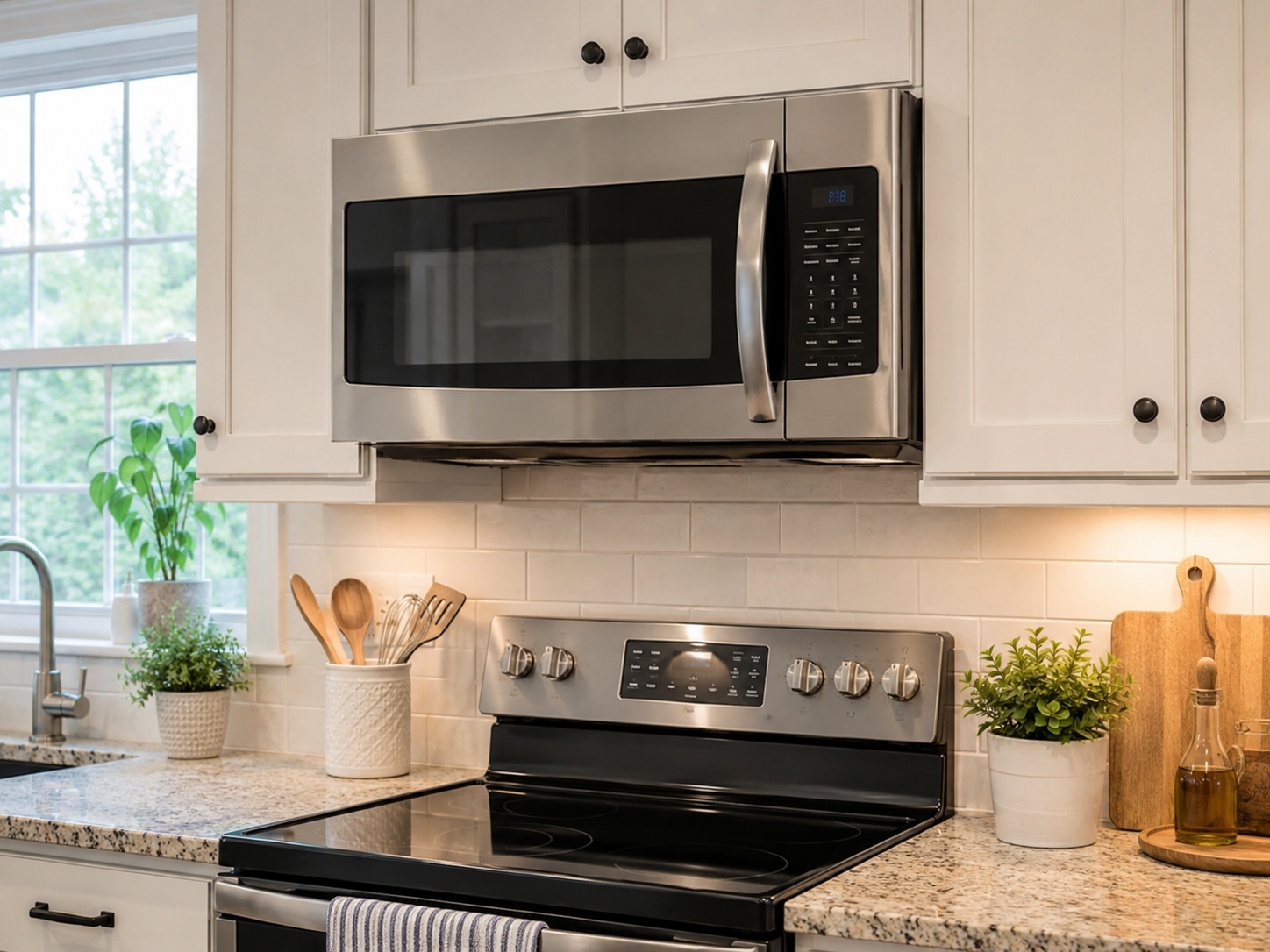
Ovens fail loudly (no heat at all) or they fail like a bad witness — confidently, and inaccurately. The display says 350°F. The cookies say otherwise. Because the drift happens over months, most people blame the recipe, the pan, or themselves long before they suspect the appliance.
Run the test properly (most people don’t)
Buy a basic dial oven thermometer — about $12 at any hardware store — and put it on the centre rack. Set the oven to 350°F and here’s the part that matters: wait a full 20 minutes past the preheat beep, then take a reading every 10 minutes for half an hour and average them. A single reading is meaningless, because every oven cycles: it overshoots the target, coasts down past it, and heats again. A swing of ±10–15°F around the set point is normal engineering, not a fault.
What the average tells you: Within 15 degrees of the dial — your oven is honest; adjust the recipe. Consistently 25+ degrees off in the same direction — the oven is lying, and that’s fixable. Wild swings of 50+ degrees between readings — stop baking and book a visit, because a component is failing mid-cycle.
The three usual liars
The temperature sensor. A thin probe in the top back corner of the cavity. Its electrical resistance is how the control board “reads” temperature, and when it drifts, the board dutifully holds the wrong number. This is the most common cause of a consistently hot or cold oven and a quick, inexpensive replacement.
The bake element. Look at it under the oven light: it should glow evenly along its whole length. Bright spots, blisters, or sections that stay dark mean it’s failing partway — the oven still reaches temperature eventually, but slowly and unevenly, which is why one side of the tray browns first. A visibly damaged element should also stop being used: the failure mode is a small, dramatic electrical arc.
The door gasket. The rubber seal around the door. Close the door on a strip of paper at several points — if it slides out freely anywhere, heat is leaking there, and the temperature at the rack can lag the display by 25 degrees on that side. Cheap fix, big difference.
The fix nobody mentions: calibration offset
If the oven is consistently off by a modest amount and the hardware checks out, most electric ovens have a hidden calibration setting that shifts the whole scale up or down by up to ±35°F — it’s in the manual under “temperature adjustment.” We set it as part of the visit whenever we replace a sensor or element, so the thermometer and the display finally agree. It’s a detail, but it’s the difference between “repaired” and “right” on oven repair calls across Kitchener, London, Waterloo and Stratford.
The service call is free with a completed repair, every repair carries a 90-day warranty, and we’re open 7 days a week at regular rates — dinner plans included.
Call (519) 900-3010 or book online and we’ll call to confirm. Mention this article for $35 off your repair.
Appliance Experts is locally owned and repairs electric and induction cooking appliances across Southwestern Ontario — see our oven repair, range repair and stove & cooktop repair services.
Frequently Asked Questions
How much temperature swing is normal in an oven?
Every oven cycles above and below its set point — a swing of roughly 10 to 15 degrees Fahrenheit either side is normal. What matters is the average over 30 minutes at the centre rack, not any single reading.
Why does my oven burn everything on one side?
Usually a bake element failing along part of its length, so one zone radiates harder than the rest. Check the element under the oven light: bright spots, blisters, or dark sections confirm it, and a damaged element should be replaced before further use.
Can an oven’s temperature be recalibrated?
Yes — most electric ovens have a calibration offset in the settings that adjusts the displayed temperature by up to about 35 degrees. It should be set after confirming the sensor and element are healthy, otherwise it just papers over a failing part.