
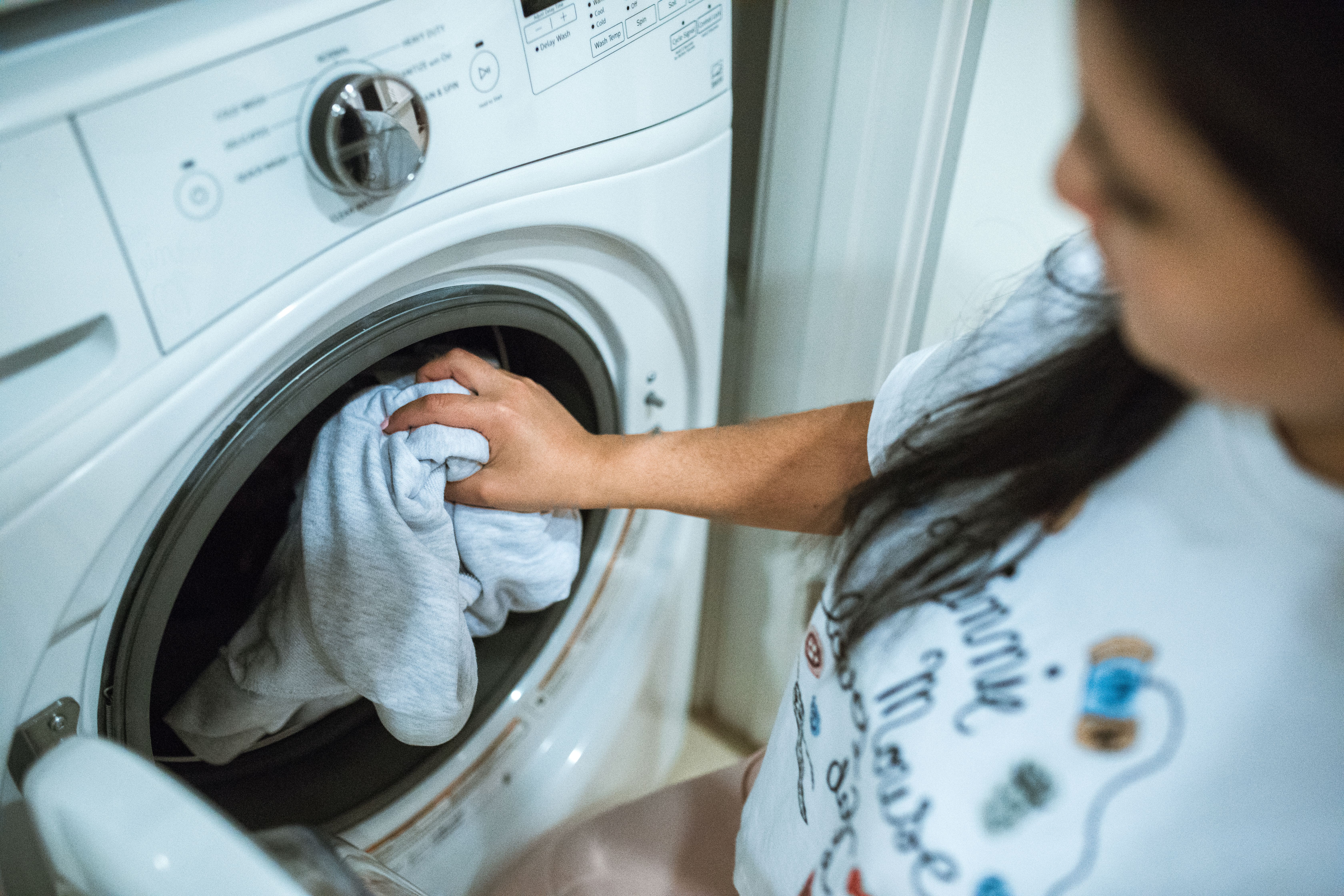
When a front load washer smells musty, the cause is nearly always biofilm: a slick of mould, bacteria, detergent residue and body oils living in the folds of the door gasket, inside the dispenser drawer and in the sump below the drum. The fix is a proper clean-out of those three spots, a hot tub-clean cycle, then a few habits that stop it growing back. Bleach on its own will not do it, and a scented booster only hides it.
This guide gives you the routine our technicians recommend on every washer call in London, Cambridge and Stratford, what to change in how you wash, and how to tell when the smell is actually a slow-drain or pump problem instead of a cleaning problem.

Why a front load washer smells in the first place
A front-loader uses far less water than an old top-loader and spins fast. That is good for your hydro bill, but detergent residue is not rinsed away as completely, and the water left behind sits in a warm, dark, sealed drum. Add a folded rubber gasket that traps a puddle after every cycle, and you have a comfortable home for mould.
Three habits make it worse: using too much detergent, using regular detergent instead of a high-efficiency (HE) formula, and closing the door as soon as the load comes out. The routine below undoes the damage; the habits section stops it recurring.
The deep-clean routine, step by step
Set aside about an hour. You need gloves, an old toothbrush, cloths, a towel, and either a washer cleaner tablet or a litre of white vinegar plus half a cup of baking soda.
Step 1: Clean the door gasket
Pull the inner lip of the grey rubber boot toward you and look inside the fold. You will likely find black residue, hair, coins and the occasional sock. Wipe the whole channel with a cloth dampened with mild bleach solution or washer cleaner, working the toothbrush into the drain holes at the bottom, then dry it. A boot that is torn or stained deep into the rubber can be replaced.
Step 2: Pull and scrub the dispenser drawer
Most drawers release with a tab at the back. Take it out, remove the siphon caps and soak everything in hot water. Scrub the cavity too; its ceiling grows a grey film that drips into every load.
Step 3: Clean the drain pump filter
Behind the small door at the bottom front of most machines is a coin trap and drain filter. Put a towel and a shallow tray down first, because up to a litre of water comes out. Unscrew the cap slowly, let it drain, then pull the filter and clean it. This is where hair pins and lint sit rotting, and it is the most overlooked source of odour. Samsung washers and most LG models have the access door at the lower left or right; Samsung’s Canadian support site has model-specific steps if yours is hidden.
Step 4: Run a hot tub-clean cycle
With the drum empty, run the Tub Clean, Self Clean or Sanitize cycle if your machine has one. If it does not, use the hottest, longest cycle with a washer cleaner tablet or with the vinegar poured in the drum and the baking soda in the detergent compartment. Run it once, then run a plain hot rinse to flush the loosened gunk out.
Step 5: Wipe down and leave it open
Wipe the drum, glass and gasket dry, and leave the door and drawer open until the inside is completely dry. From now on, that is the default position between loads.
From the van: when we peel back the door boot on a smelly washer in London, the usual find is a black, slimy ring and a couple of socks. The customer has always been using far too much detergent. Cut the dose in half and half the problem goes away on its own.
Appliance Experts repairs washers across London and Southwestern Ontario, 6 AM–9 PM, seven days a week — usually same day. The service call is free with the repair, and every job carries a 90-day parts and labour warranty.
Stop it coming back
- Use HE detergent, and use less of it. The line on the cap is a maximum for heavy soil and hard water, not a target. For a normal load, two tablespoons of liquid HE detergent is plenty. If you still see suds through the glass at the end of the rinse, you are using too much.
- Skip fabric softener. It is waxy, it coats the drum and the boot, and it is food for biofilm. Dryer balls or a splash of vinegar in the rinse do the job without the residue.
- Wash hot sometimes. Cold-water washing is fine for clothes, but the machine needs a hot cycle every week or two to break down oils.
- Do not leave wet laundry in the drum. Set a timer or use the delay-start so the cycle finishes when you are home.
- Run a tub-clean monthly. Many machines flash a reminder; if yours does not, put it on the calendar.
- Leave the door and drawer open. A magnetic door prop keeps it open a few centimetres if small children are around.
When the smell is really a drain or pump problem
Sometimes the routine helps for a week and then the odour returns, sharper and more like a sewer than a damp basement. That points at water that is not leaving the machine. Look for a puddle left in the drum after a cycle, a long drain phase, or a spin that stops early with a drain error.
The causes are a clogged drain hose, a pump filter you missed, a drain pump with a worn impeller, or a standpipe in the wall that is partly blocked. Our post on a washer that will not drain or spin walks through those. A drain hose pushed too far down the standpipe can also siphon dirty water back into the drum, which no amount of cleaning will fix.
When to call a pro
Book a technician if the gasket is torn, if the smell persists after two full clean-outs, if water is left in the drum after a cycle, or if the drum wobbles or grinds along with the odour. A boot, a drain pump or a tub seal is a routine job for us, and far cheaper than replacing a washer that otherwise works well.
Our washer repair service handles every major electric front-load brand, and our London washer repair team is usually there the same day. Typical washer repairs in Southwestern Ontario run $180 to $380, and the service call is free when you go ahead with the repair.
Frequently asked questions
Why does my front load washer smell like mildew?
Low water use, fast spins and a folded rubber door gasket leave detergent residue and moisture behind after every cycle. Mould and bacteria feed on that residue and form a biofilm in the gasket, dispenser and sump, which produces the musty, mildew smell.
Does vinegar or bleach get rid of the smell in a washer?
Either helps as part of a full clean-out, but neither works alone. The biofilm has to be physically wiped out of the gasket fold, the dispenser and the pump filter, then flushed with a hot cycle. Never mix bleach and vinegar in the same cycle.
How often should I run a tub clean cycle?
Once a month is a good default for a family that runs several loads a week. If you wash mostly in cold water or use a lot of detergent, every two to three weeks is better. Running a hot cycle regularly also helps between tub cleans.
Can a smelly washer make my clothes smell?
Yes. Towels are usually the first to pick it up because they hold water longer. If freshly washed laundry smells sour or damp after drying, the machine is the source, and cleaning the gasket, dispenser and filter usually fixes it within a few loads.
Should I leave the washer door open all the time?
Yes, leave it open a few centimetres between loads so the drum and gasket can dry out. Pull the dispenser drawer open a little as well. This one habit prevents most of the biofilm growth that causes the odour.
When is a washer smell a sign of a repair problem?
If the smell returns quickly after cleaning, is more like sewage than mildew, or comes with water left in the drum, a slow drain or an error code, water is not leaving the machine. That points to a clogged hose, a failing drain pump or a siphoning drain, which need attention beyond cleaning.
The bottom line
A front load washer smells musty because biofilm has moved into the gasket, the dispenser and the sump, not because the machine is faulty. Clean all three properly, run a hot tub-clean cycle, and then change the habits: HE detergent in small doses, no softener, a hot wash now and then, and the door left open. If the odour comes back quickly or water is staying in the drum, you have a drain or pump issue and we can sort that out. Call Appliance Experts at (519) 900-3010 or book online and we will get your laundry smelling like laundry again.